
Food Pair Memory Challenge
What players say
Food Pair Memory Challenge succeeds by keeping its core concept simple while layering in enough strategic depth to stay interesting. The progression from small grids to larger, more complex boards feels natural and rewarding. The clean 2D art style makes identifying items easy, and the browser-based play means zero setup. It is an excellent choice for anyone looking for a calm yet engaging brain teaser that respects your time.
How to play
Core Matching Mechanics
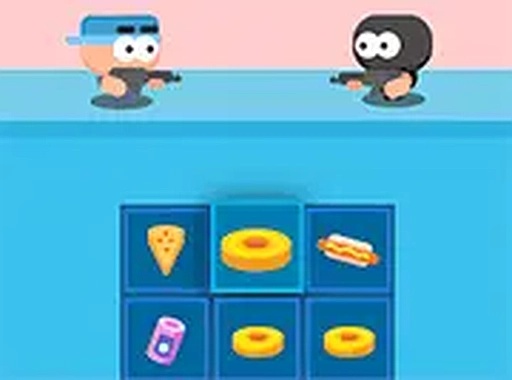
At its heart, Food Pair Memory Challenge revolves around identifying and pairing identical food items scattered across a grid. Players select two tiles at a time, hoping to reveal matching pictures. Each correct pair disappears from the board, earning points and bringing you closer to clearing the stage. The challenge lies not just in remembering where each item is located, but also in planning the order of selections to maximize efficiency. As the game progresses, the board layout becomes more complex, requiring sharper observation and quicker recall.
Difficulty Progression
The game gradually increases its demands as players advance through rounds. Early levels feature a smaller grid with fewer distinct food types, making matches easier to spot. Later stages introduce larger boards with more variety, forcing players to hold multiple item locations in memory simultaneously. Some rounds may impose move limits or time constraints, adding pressure to decision-making. This steady climb in complexity ensures that the experience remains engaging without becoming frustrating, offering a balanced curve that suits both newcomers and experienced puzzle fans.
Visual Design and Accessibility
Food Pair Memory Challenge uses clean, colorful 2D graphics that clearly depict each food item. The simple art style helps players quickly distinguish between different foods, reducing visual clutter. Buttons and menus are large and clearly labeled, making navigation straightforward on any device. The game runs smoothly in standard web browsers without requiring any plugins or software installation. This accessibility means players can jump into a session on a desktop computer during a break or continue on a tablet while commuting.
Strategic Thinking in Practice
While memory is the primary skill tested, successful players quickly learn that strategy matters just as much. Deciding which pairs to match first can affect the rest of the round. For example, matching items near the edges first may open up the center, while clearing central pairs might create easier access to corner tiles. Experienced players often develop mental maps of the board, tracking not just where items are, but also which ones remain unmatched. This tactical layer transforms each round from simple memorization into a thoughtful puzzle.
Family-Friendly Entertainment
The game is designed to be enjoyed by players of all ages. Its content features only cheerful food illustrations with no violent or mature themes. The rules are simple enough for young children to grasp, yet the increasing difficulty keeps older players engaged. Parents can feel confident allowing their kids to play without supervision. The short round length makes it ideal for quick play sessions, while the cumulative scoring encourages longer play for those seeking to improve their high scores.






Comments
Sign in to comment
You must be logged in before posting a review or rating.
No account? Create one
No comments yet. Be the first to comment!