
Logic Grid Puzzle
What players say
Logic Grid Puzzle offers a focused brain-training experience built around one clear mechanic: rotating tiles to direct energy. The difficulty curve is well-paced, introducing new tile types and obstacles without overwhelming beginners. The hint system and timer add flexibility for different play styles. It suits players who enjoy spatial reasoning and methodical problem-solving, though those seeking action or story will find it minimal.
How to play
The Core Mechanic
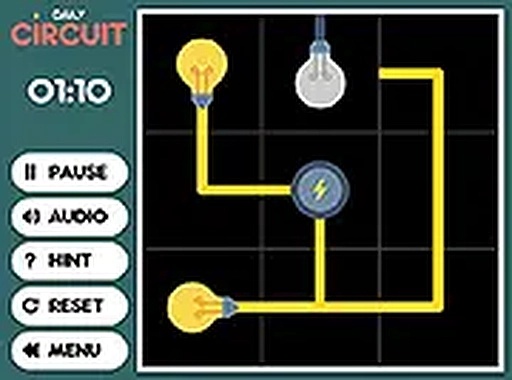
Every level in Logic Grid Puzzle presents a grid of tiles: power sources, connectors, and devices. Your job is to tap or click each tile to rotate it, aligning pathways so energy travels from the source to every device. Because each rotation affects the entire network, you need to think ahead rather than make random moves. Early boards use simple straight and corner connectors, while later ones introduce branching paths and limited moves that demand deeper foresight.
Progression and New Challenges
The game gradually adds new tile types and more complex grid configurations. After you master basic connectors, splitter tiles appear that divide energy flow, along with obstacles that block connections. This steady ramp lets beginners learn without frustration while giving experienced solvers plenty to think about. A timer adds gentle pressure for those working on solving speed.
Visual Feedback and Controls
Clean, colorful graphics make each component easy to identify. The interface uses clear icons and a simple tap-to-rotate mechanic that works with both mouse and touch screen. A subtle color change on completed devices gives immediate feedback, and the hint button offers help without breaking your flow. The game runs smoothly in any modern browser with no downloads or plugins required.
Tips for Efficient Solving
Start by examining the power source and tracing possible paths outward. Look for tiles that have only one valid orientation to anchor your solution. When stuck, use the hint feature to learn a new approach rather than relying on it repeatedly. Practice regularly to improve pattern recognition and speed. Taking a systematic approach, such as rotating all tiles in a row before moving to the next, can help reveal hidden connections.
Compatibility
FAQ
Comments
Sign in to comment
You must be logged in before posting a review or rating.
No comments yet. Be the first to comment!









Editorial Notes