

Color Tile Arrangement Challenge
What players say
Color Tile Arrangement Challenge stands out for its calm, pressure-free approach to logical puzzles. The gradual difficulty curve ensures that players of all ages can enjoy the satisfaction of solving increasingly complex patterns. The clean visuals and responsive controls make each session pleasant, while the absence of timers allows for thoughtful play. It is an excellent choice for anyone seeking a relaxing mental exercise without the stress of competition or time limits.
How to play
Pattern Replication Mechanics
At the heart of this experience lies a straightforward yet engaging task: moving colored squares one at a time into empty adjacent cells until they match a displayed target. Each puzzle presents a unique starting layout, requiring careful observation to determine the most efficient sequence of moves. The lack of any scoring system or time constraint encourages a thoughtful, unhurried approach. Players can experiment freely, learning from each attempt without fear of failure. This design makes the core loop both accessible to newcomers and satisfying for those seeking a gentle mental stretch.
Visual Clarity and Accessibility
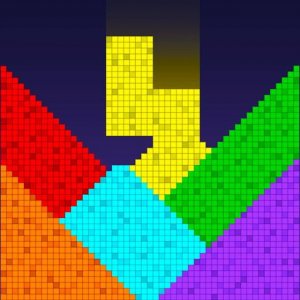
The interface uses bright, distinct colors and clean lines, ensuring that each tile is easily identifiable. The grid layout remains uncluttered, allowing players to focus entirely on the arrangement task. This visual simplicity is intentional, reducing eye strain during longer sessions and making the game suitable for younger players or those with visual sensitivities. The responsive controls provide immediate feedback with each tile movement, creating a smooth and intuitive interaction that requires no instruction manual.
Progression and Difficulty Curve
Early challenges consist of small grids with few tiles, allowing players to grasp the basic movement and matching concepts quickly. As one advances, the puzzles introduce larger grids and more complex target patterns that require multiple steps and forward planning. This gradual increase in complexity ensures a steady learning curve, building confidence before introducing more demanding configurations. A progress tracker may be available to show completed puzzles, offering a sense of accomplishment without competitive pressure.
Strategic Approaches for Solving
Successful completion often involves studying the target arrangement before making the first move. Many players find it helpful to work from the edges or corners inward, as these positions are less flexible. Since there is no penalty for incorrect moves, trying different sequences is encouraged. Over time, regular practice improves the ability to visualize several moves ahead, turning each new puzzle into a satisfying exercise in logical deduction. Patience and methodical thinking are the most reliable tools for mastering even the most intricate layouts.








Comments
Sign in to comment
You must be logged in before posting a review or rating.
No account? Create one
No comments yet. Be the first to comment!