
Screw Puzzle Challenge
What players say
Screw Puzzle Challenge strips puzzle design down to one satisfying interaction: removing screws in the right sequence so metal plates drop away. The lack of hints and absence of a timer push players toward careful observation rather than trial-and-error clicking. Its clean mechanical visuals and responsive sound feedback make each correct removal feel earned. The main limitation is that the game offers no guidance if you get stuck, so patience is required. It suits players who enjoy slow, logical problem solving more than fast-paced challenges.
How to play
What You Actually Do
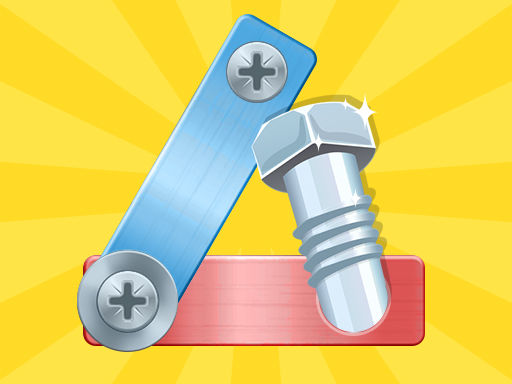
Screw Puzzle Challenge is built around a single repeated action: clicking a screw to remove it. Each level shows a set of metal plates held together by fasteners. Remove the correct screw and a plate drops away, opening up the next part of the puzzle. Remove the wrong one and you may block your own progress. There are no hints, so every decision comes from reading the structure in front of you.
Why Order Matters
The challenge is not clicking speed. It is sequence. Because plates overlap and screws can hold more than one piece in place, the order in which you remove them determines whether the puzzle opens or locks up. You can restart a level at any time, which makes experimentation low-risk. The difficulty rises gradually as arrangements become more layered, but the game never introduces a timer or a penalty for thinking.
Look and Feel
The visuals stay clean and mechanical, with metal plates and screws as the main elements. Sound design reinforces each move: the clink of falling metal gives immediate feedback that a choice was correct. That combination of simple visuals and tactile audio is what gives the game its hands-on feel, even though everything happens through clicks.
Who It Suits
This is a game for players who prefer planning over reflexes. The gentle learning curve and click-based controls make it accessible to a wide age range, while the absence of hints keeps it engaging for anyone who enjoys deduction. If you like puzzles that reward patience and careful observation, the structure here fits that preference. If you want fast action or explicit guidance, it will feel slower by design.
Compatibility
FAQ
Comments
Sign in to comment
You must be logged in before posting a review or rating.
No comments yet. Be the first to comment!






Editorial Notes